Sumner County Court is the central court system serving residents across Sumner County, Tennessee. The Sumner County, Tennessee, court system handles civil cases, criminal matters, family law disputes, probate proceedings, traffic violations, and other legal actions filed within the county. Many people search for Sumner County Court records, case details, court dates, filing information, and public documents related to ongoing or completed proceedings. The court system plays an important role in maintaining legal records, processing case filings, scheduling hearings, and supporting judicial operations. This page provides detailed court information, record resources, case-related details, and helpful information about the courts operating throughout Sumner County.
The Sumner County, TN, court system is part of the broader network of Tennessee courts and serves thousands of residents each year. Court records may contain information related to lawsuits, criminal charges, property disputes, probate cases, family court matters, judgments, and court decisions. Many visitors look for information about case searches, court divisions, public records, clerk offices, filing procedures, and court locations. This page brings together key details about the local county court system, helping visitors locate relevant court resources and better understand how different courts serve the county. Whether researching court records, reviewing case information, or identifying the appropriate court division, this resource provides a clear starting point for court-related research in Sumner County.
Case Search and Court Docket Information
A Sumner County Case Search helps users review public court records, case updates, and hearing details online. The Sumner County Court Docket shows scheduled hearings, case activity, and court proceedings across different court divisions. People use case lookup tools to check case status, track hearing dates, and review court actions without visiting the courthouse.
Case Search
The Sumner County Case Search system provides online access to court records from civil, criminal, and traffic matters. Users can search records through official court portals using basic case details.
Search details include:
- Case number
- Party name
- Filing date
- Attorney name
- Case type
This search method helps users quickly find case progress, status updates, and court filings.
How to Search Sumner County Court Cases Online
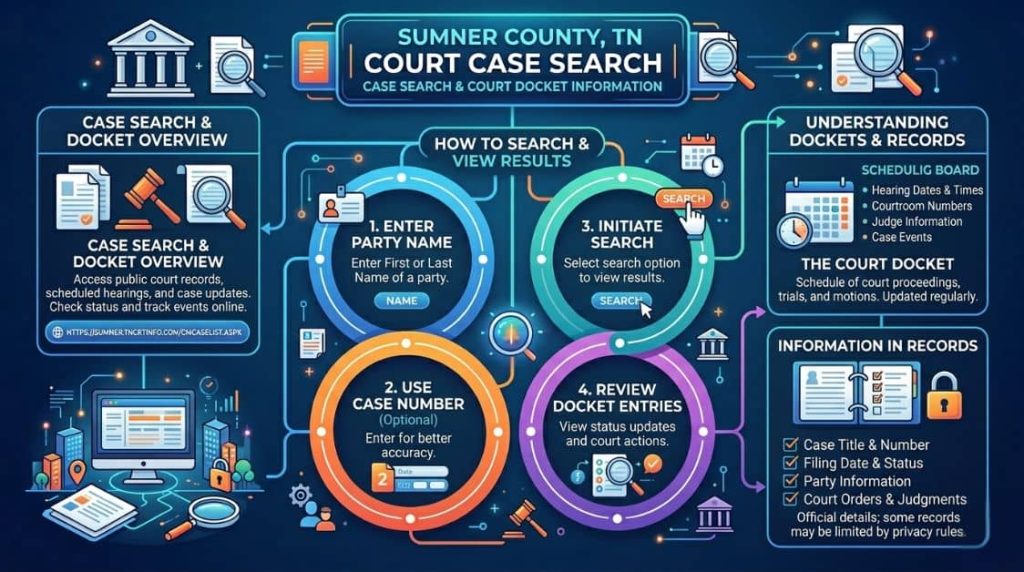
The online case search system is simple and works through the official court records portal. Users can follow these steps:
- https://sumner.tncrtinfo.com/cmCaseList.aspx
- The official Sumner County case search page
- Enter the first name or last name of a party
- Add case number if available for better accuracy
- Select the search option to view results
- Open the case record to review the docket entries and status updates
This portal provides access to court case listings and docket-related information for Sumner County.
The Court Dockets
The Sumner County Court Docket works as a schedule of court proceedings. It lists upcoming hearings, motions, trials, and other case events. Dockets are updated regularly based on court activity, so users can track changes in hearing dates or courtroom assignments.
Key docket details include:
- Hearing dates and times
- Courtroom numbers
- Judge information
- Case numbers
- Party names
- Motion schedules
This information helps users follow case progress from filing to final judgment.
Information Available in Case Records
Court records contain official details related to each case filed in Sumner County courts. The level of detail depends on case type and court rules.
Typical case record data includes:
- Case title and number
- Filing date and case status
- Party information
- Court orders and judgments
- Hearing schedules
- Docket entries and updates
Some records may be limited due to privacy rules, especially in family or juvenile matters. However, most civil and criminal case details remain available for public review.
Court Divisions Within Sumner County Court
The Sumner County Court system includes several court divisions, with each division handling a specific type of case. These court divisions manage matters such as civil court cases, criminal court cases, family law proceedings, probate matters, juvenile cases, and disputes involving property or estates. The court structure helps keep cases organized and allows judges to focus on particular areas of law. As a result, residents can identify the correct court division based on the type of legal issue involved.
Circuit Court
The Sumner County Circuit Court handles many of the county’s major legal disputes. This court hears both civil court cases and criminal matters that fall within its jurisdiction.
Civil cases often involve:
- https://sumnercountytn.gov/departments/courts/
- Personal injury claims
- Contract disputes
- Property disagreements
- Business-related lawsuits
- Appeals from lower courts
The Circuit Court may hear jury and non-jury trials. It serves as a key part of the local judicial system and processes a large number of cases each year. People involved in significant legal disputes often have their cases reviewed within this division.
Criminal Court
The Sumner County Criminal Court focuses on criminal offenses and prosecutions. This division handles cases involving violations of state criminal laws, ranging from misdemeanor offenses to serious felony charges.
Matters heard in the Criminal Court include:
- Assault charges
- Drug-related offenses
- Theft and burglary cases
- Domestic violence allegations
- Felony criminal proceedings
Judges in this court oversee hearings, trials, sentencing proceedings, and other criminal case activities. The court works alongside prosecutors, defense attorneys, law enforcement agencies, and probation services to move cases through the judicial process.
General Sessions Court
The Sumner County General Sessions Court serves as an entry point for many legal matters. This division handles a broad range of cases and often provides a faster resolution process for less complex disputes.
Cases commonly heard in the General Sessions Court include:
- Traffic violations
- Small claims disputes
- Landlord-tenant cases
- Civil warrants
- Preliminary criminal hearings
Many residents interact with this division more frequently than any other court. The court often determines whether certain criminal court cases should move forward to higher courts for further proceedings.
Chancery Court
The Sumner County Chancery Court addresses cases involving equity, trusts, estates, and other specialized legal matters. This court plays a major role in resolving disputes that require remedies beyond monetary damages.
Areas commonly handled by the Chancery Court include:
| Matter Type | Examples |
|---|---|
| Probate Matters | Estate administration, wills, inheritance disputes |
| Property Issues | Boundary disputes, ownership questions |
| Trust Cases | Trust management and beneficiary concerns |
| Business Disputes | Partnership and corporate disagreements |
Many probate matters begin in this division. The court often reviews estate administration issues after a person’s death and addresses conflicts involving beneficiaries or fiduciaries.
Juvenile Court
The Sumner County Juvenile Court focuses on cases involving minors and family-related concerns. Its purpose is to protect the welfare of children while addressing legal matters that affect young people and their families.
The court frequently handles:
- Juvenile delinquency cases
- Child custody disputes
- Child support matters
- Dependency and neglect cases
- Adoption-related proceedings
Many family law proceedings involving children are heard within this division. Judges often work with social services, schools, counselors, and parents to support outcomes that promote child safety and stability.
How the Court Divisions Work Together
Each division within the Sumner County Court system serves a distinct purpose, yet all divisions contribute to the county’s judicial process. A civil lawsuit may proceed in Circuit Court, a criminal prosecution may proceed in Criminal Court, and family-related matters involving minors may be heard in Juvenile Court.
This structure allows court divisions to process cases efficiently and direct legal matters to judges with experience in the relevant area of law. Whether a case involves civil court cases, criminal court cases, family law proceedings, or probate matters, the appropriate division provides the forum for hearings, decisions, and case resolution.
Sumner County Court Records
Sumner County Court Records contain information about cases filed and processed through the county court system. These public court records may include civil disputes, criminal proceedings, probate matters, court filings, judgments, and other legal documents maintained by the court. Court records provide valuable information for residents, attorneys, researchers, and anyone seeking details about court proceedings. Many records are available as public records, though certain files may remain restricted under state law or court order. These records help create an official history of legal actions and court decisions within Sumner County.
Types of Court Records
Sumner County Court Records include several categories of cases handled by the local court system. Common record types include civil records, criminal records, probate records, family law proceedings, traffic cases, court orders, judgments, and case filings. These records often contain legal documents such as petitions, motions, affidavits, hearing notices, and final rulings. People frequently review court records to locate case numbers, verify case status, examine filing dates, and research court activity related to a specific matter.
Civil Records
Civil records involve disputes between parties seeking legal remedies rather than criminal penalties. These records often document disagreements involving contracts, property, business matters, debt collection, personal injury claims, and landlord-tenant issues.
A civil case file may contain:
- Complaints and petitions
- Responses from defendants
- Motions filed by either party
- Court orders
- Settlement agreements
- Final judgments
Civil court records serve as an important source of information for people researching litigation history or reviewing prior court decisions. Many files include a timeline of case activity, making it easier to track how a matter progressed through the court system.
Criminal Records
Criminal records document cases involving alleged violations of state or local laws. These records help maintain an official account of criminal proceedings handled by the court.
A criminal court file may include:
- Arrest-related court filings
- Criminal complaints
- Indictments or charging documents
- Hearing records
- Plea agreements
- Sentencing orders
- Final case dispositions
Criminal records provide information about the progression of a case from the initial filing through final resolution. Some records may contain restrictions if they involve sealed proceedings, juvenile matters, or protected information.
Probate Records
Probate records involve matters related to estates, wills, guardianships, and conservatorships. These records help document the legal process used to manage a person’s affairs after death or when court supervision becomes necessary.
Probate case files may contain:
- Wills and codicils
- Estate inventories
- Executor appointments
- Guardianship petitions
- Conservatorship orders
- Distribution records
These legal documents create a record of how assets were managed, distributed, or protected under court supervision. Probate records often provide valuable historical and genealogical information, making them useful for family history research and estate-related inquiries.
Court Services Available to the Public
Sumner County Court provides several court services that help the public manage legal proceedings, obtain court records, submit filings, and request official information. These public services support transparency, court administration, and efficient case management across different court divisions. Court visitors often need assistance with records, case documents, filing procedures, and administrative matters. To meet these needs, the court offers services that help residents, attorneys, businesses, and interested parties interact with the judicial system in an organized manner. These services support civil court cases, criminal court cases, family law proceedings, probate matters, and other legal actions handled by the court.
Records Access
Court records play an important role in public transparency and case research. Many records maintained by Sumner County Court may be available for public review, subject to state laws, court rules, and privacy restrictions.
People often seek records for:
- Civil court cases
- Criminal court cases
- Probate matters
- Family law proceedings
- Judgments and court orders
- Case docket information
Some records may contain confidential information and may not be available for public inspection. Court staff typically follow legal requirements that protect sensitive personal data and sealed case information.
| Record Type | Common Information Available |
|---|---|
| Civil Cases | Case filings, motions, judgments |
| Criminal Cases | Charges, hearings, court actions |
| Probate Cases | Estate administration records |
| Family Cases | Limited public information based on court rules |
Accurate record management helps support efficient court administration and maintains an organized judicial record system.
Court Filings
Court filings allow parties to submit documents related to ongoing or new legal matters. Filing procedures vary depending on the type of case and court division involved.
Documents filed with the court include:
- Complaints and petitions
- Motions and responses
- Affidavits
- Probate documents
- Family court paperwork
- Notices and legal forms
Court clerks process submitted documents and place them into the official case record. Filing requirements often include deadlines, formatting standards, filing fees, and supporting documentation. Proper filing helps cases move through the judicial process without unnecessary delays.
Public Information Requests
Members of the public may request general court information through designated court offices. These requests often involve non-confidential information about court operations, hearing schedules, case status details, and available public records.
Public information requests may help people obtain:
- Court calendars
- Hearing dates
- Clerk’s office information
- Judicial department contacts
- Available public records
- General procedural information
These public services promote transparency and help residents stay informed about court activities and legal processes.
Administrative Services
Administrative services support the daily operation of Sumner County Court and assist visitors with routine court-related needs. Court administration personnel help coordinate case processing, courtroom scheduling, record maintenance, and public inquiries.
Administrative services commonly include:
- Case management support
- Court scheduling assistance
- Clerk office services
- Fee collection processing
- Document certification
- Court form distribution
- Information desk assistance
Strong court administration practices help maintain orderly legal proceedings and improve communication between the court and the public. Through these services, Sumner County Court continues to provide reliable public services that support fairness, efficiency, and the effective operation of the local judicial system.
Clerk of Court and Administrative Offices
The Sumner County Clerk of Court plays a central role in court administration by managing case records, processing legal filings, and supporting daily court operations. This office helps maintain accurate official records and assists judges, attorneys, and the public throughout the court process. The Clerk of Court serves as one of the most important administrative offices within the county court system. Through organized recordkeeping and case management, the office helps courts operate efficiently and maintains transparency within the judicial process. From filing court documents to preserving case histories, the clerk’s office supports many functions that keep court proceedings moving forward.
Responsibilities of the Clerk
The Clerk of Court performs a wide range of administrative duties that support the local judicial system. The office acts as the primary custodian of many court documents and case-related materials.
Responsibilities often include:
- Processing legal filings submitted to the court
- Maintaining court dockets and case schedules
- Collecting court fees and related payments
- Issuing certified copies of court documents
- Recording judgments, orders, and court decisions
- Assisting with public record requests
- Managing case information systems
Court staff work closely with judges, attorneys, law enforcement agencies, and members of the public. Through these duties, the office helps maintain accurate documentation for civil, criminal, family, probate, and traffic-related matters.
Record Management
Record management remains one of the most significant functions of the clerk’s office. The office preserves official records that document court proceedings and legal actions within the county.
These records may include:
| Record Type | Purpose |
|---|---|
| Civil Case Records | Track lawsuits and civil disputes |
| Criminal Case Files | Document criminal proceedings |
| Probate Records | Maintain estate and guardianship matters |
| Family Court Records | Store divorce, custody, and support cases |
| Court Orders and Judgments | Preserve final court decisions |
Strong record management practices help maintain accuracy, accountability, and public confidence in the judicial system. Court personnel organize documents, update case information, and preserve records according to applicable retention requirements. As a result, court users can locate information more efficiently when records are requested.
Court Support Functions
Beyond maintaining records, the clerk’s office provides valuable court support functions that help daily operations run smoothly. Court administration staff coordinate schedules, prepare courtroom materials, and process documentation before and after hearings.
Support functions include:
- Managing hearing and trial calendars
- Preparing court files for judicial review
- Processing orders issued by judges
- Maintaining court databases
- Coordinating communication between court departments
- Providing administrative support during proceedings
These responsibilities contribute to an organized court environment and help maintain efficient case flow. Through careful administration, record preservation, and filing services, the Sumner County Clerk of Court remains a key part of the county’s judicial system.
Court Forms, Fees, and Filing Information
Court forms, filing fees, and filing procedures play a key role in many court-related matters in Sumner County. People often need the correct paperwork, payment information, and filing instructions before submitting a case, motion, or request to the court. Whether a person is starting a civil case, responding to a lawsuit, filing family court documents, or requesting court records, using the proper court forms helps prevent delays. Court staff generally require complete and accurate documents before a filing can move forward.
Common Court Forms
Many court matters require specific legal forms based on the type of case. The exact documents vary by court division and case category.
Commonly used court forms may include:
- Civil complaint forms
- Small claims paperwork
- Divorce and family court petitions
- Child support forms
- Child custody documents
- Name change requests
- Probate and estate forms
- Guardianship filings
- Motion and response forms
- Appeal-related paperwork
The court may provide certain forms directly, while others come from state-approved judicial resources. Each form usually contains filing instructions, required signatures, and supporting document requirements.
| Form Type | Typical Purpose |
|---|---|
| Civil Forms | Start or respond to civil cases |
| Family Forms | Divorce, custody, and support matters |
| Probate Forms | Estate administration and guardianships |
| Small Claims Forms | Lower-value disputes between parties |
| Motion Forms | Request court action during a case |
Before submitting paperwork, filers often review all instructions and verify that every required section is complete.
Filing Procedures
Court filings follow specific filing procedures established by the court system. Missing documents or incomplete information can result in processing delays.
A typical filing process includes:
- Select the correct court forms.
- Complete all required sections.
- Gather supporting records or evidence.
- Sign documents where required.
- Submit paperwork to the appropriate court clerk.
- Pay applicable filing fees and court costs.
- Receive a case number or filing confirmation.
Some filings may require copies for all parties involved. Certain cases may require service of process, meaning a legal notice must be delivered to the opposing party according to court rules.
Court Fee Information
Most court actions involve filing fees or other court costs. The amount often depends on the type of case, court division, and requested action.
Common court-related fees may include:
- Initial filing fees
- Motion filing fees
- Appeal fees
- Record copy charges
- Certified document fees
- Service-related costs
| Fee Category | Purpose |
|---|---|
| Filing Fee | Opens or initiates a case |
| Motion Fee | Requests court action |
| Copy Fee | Provides document copies |
| Certification Fee | Issues certified records |
| Appeal Fee | Files an appeal request |
Fee schedules can change periodically. Court clerks typically maintain current pricing information and payment requirements. In some situations, a person with limited financial resources may qualify to request a fee waiver or reduced payment option, subject to court approval and applicable rules.
Court Calendar, Hearings, and Scheduling
The court calendar helps the public review upcoming hearings, court sessions, and scheduled judicial proceedings in Sumner County Court. It provides important scheduling information that allows parties, attorneys, and visitors to stay informed about upcoming court appearances and case-related events.
Court calendars support the daily operation of the court by organizing hearings, trials, and other legal matters. Many courts publish calendar information that may include case numbers, hearing dates, courtroom assignments, and judge information. Since schedules can change, parties often review the court calendar before attending a court session to confirm the most current information.
Hearing Dates
Hearing dates are assigned after a case is filed or when a judge schedules a matter for review. These dates allow parties to appear before the court for motions, status conferences, arraignments, pretrial proceedings, family law matters, probate cases, or trials. A hearing date may be rescheduled if a continuance is granted or if court scheduling needs change. Checking hearing schedules regularly can help parties stay aware of upcoming judicial proceedings and avoid missing important court appearances.
Court Scheduling Process
The court scheduling process begins once a case enters the court system and receives a case number. Court staff coordinates hearing schedules based on courtroom availability, case type, judicial assignments, filing requirements, and procedural deadlines. After a date is selected, notice is provided to the parties involved, and the matter is placed on the official court calendar. This process helps organize court sessions efficiently and supports the timely management of cases throughout the court system.
Court Locations and Contact Information
The Sumner County Court system operates from several court facilities that serve different case types and public needs. Court contact information, courthouse locations, and office hours help visitors find the correct court office and reach staff for case-related questions. Court visitors can save time by confirming contact details before arriving. Many court services require appointments, specific filing procedures, or document requirements that vary by court division.
Main Court Facilities
Sumner County courts are primarily located in Gallatin, Tennessee, which serves as the county seat. The main courthouse handles a variety of legal matters, including civil cases, criminal proceedings, probate matters, and other court-related functions.
Primary Courthouse Location
| Facility | Address |
|---|---|
| Sumner County Courthouse | 100 Public Square, Gallatin, TN 37066 |
Visitors should verify the correct courthouse location before a visit. Some court offices and judicial departments may operate from separate buildings within the county.
Typical Office Hours
- Monday through Friday
- 8:00 AM to 4:30 PM
- Closed on weekends and county-recognized holidays
Court offices may adjust hours during holidays, severe weather events, or special administrative closures. Checking current schedules before travel can prevent delays.
Services available at court facilities include:
- Case filing and document submission
- Court record requests
- Payment processing for eligible fees
- Probate and civil court services
- Jury-related information
- Public records assistance
Contact Resources
Court contact information helps visitors reach the correct department before visiting a courthouse location. A quick phone call or email can confirm filing requirements, hearing schedules, office hours, and available court services.
Sumner County Court Contact Details
| Contact Type | Information |
|---|---|
| Main Courthouse Address | 155 East Main Street, Gallatin, TN 37066 |
| Mailing Address | P.O. Box 549, Gallatin, TN 37066 |
| Main Phone Number | (615) 452-4367 |
| Chancery Court Phone | (615) 452-4282 |
| Chancery Court Fax | (615) 451-6031 |
| Chancery Court Email | SumnerClerkandMastersOffice@tncourts.gov |
| Office Hours | Monday–Friday, 8:00 AM–4:30 PM CST |
| Weekend Hours | Closed Saturday and Sunday |
The court system includes several divisions that handle different case types. Contacting the correct office can reduce wait times and help visitors receive accurate information.
Department Contacts
| Department | Phone |
|---|---|
| General Sessions Criminal | (615) 452-4367 Ext. 2 |
| General Sessions Civil | (615) 452-4367 Ext. 3 |
| Circuit Court Civil | (615) 452-4367 Ext. 4 |
| Circuit Court Criminal | (615) 452-4367 Ext. 5 |
| Juvenile Court | (615) 452-4367 Ext. 6 |
Best Time to Contact the Court
Court offices are often busiest during the first hour of the workday and shortly after lunch. Many visitors find it easier to reach staff between 9:00 AM and 11:00 AM or 1:30 PM and 3:30 PM on weekdays.
Before calling or visiting, it helps to have:
- Case number
- Party name
- Hearing date
- Filing date
- Relevant court documents
Court staff can provide information about court records, filing procedures, payment options, and hearing schedules. Staff members cannot provide legal advice or recommend legal strategies.
(FAQ) About Sumner County Court
Many people seek information about Sumner County Court when researching court records, case searches, filing procedures, and court divisions. The following frequently asked questions provide clear answers about how the court system works and where specific court information may be found.
What Cases Are Handled by Sumner County Court?
Sumner County Court handles several types of legal matters through different court divisions. These cases may include criminal offenses, civil disputes, traffic violations, probate matters, family law proceedings, and juvenile cases. Each division has authority over specific legal issues based on state law and court jurisdiction. Case requirements, hearing schedules, and filing procedures vary depending on the type of case involved. Parties should work with the appropriate court division when seeking information about a particular matter.
How Can Court Records Be Accessed?
Court records contain details about cases filed within the county court system and may be available through public record requests or court record databases. These records often include filing dates, party names, court orders, judgments, and hearing information. Some records are open for public review, while others may be restricted by law due to privacy concerns. Availability depends on the type of case and applicable court rules. People seeking court records should follow the procedures established by the court or the Clerk of Court.
What Is Included in a Court Docket?
A court docket serves as the official timeline of activity for a case and records important events from filing through resolution. Docket entries commonly include hearing dates, court appearances, motions filed by the parties, judicial orders, and status updates. This information helps participants monitor the progress of a case and stay informed about upcoming proceedings. Court dockets are useful for tracking deadlines and reviewing recent case activity. The amount of information available may differ based on court policies and record restrictions.
How Does Case Search Work?
A case search system allows users to locate court information using specific details connected to a legal matter. Searches are commonly performed using a case number, party name, attorney name, or filing date. Search results may display basic case details, docket information, hearing schedules, and case status updates. These tools help people find information more efficiently without reviewing large volumes of records. Search features and available information vary depending on the court’s record management system.
Which Court Division Should I Contact?
The correct court division depends on the legal issue involved in the case. Criminal divisions typically handle criminal charges, while civil divisions manage lawsuits and monetary disputes. Family-related matters such as divorce, child custody, and support issues are generally handled by family court divisions. Probate divisions oversee estates, wills, and guardianship matters, while juvenile divisions address cases involving minors. Contacting the appropriate division can help people obtain accurate court information and answers to case-specific questions.